
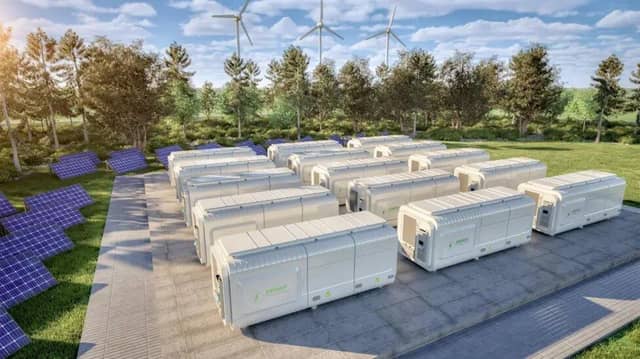

Planning permission is currently being sought to build a 13 hectare 300mgw Battery Energy Storage System (BESS) at Bentley. The developer is Zenobe which states: 'It is speeding the UK towards net zero with grid-scale battery storage and electric vehicles.'
The company designs, finances and operates battery solutions. The batteries capture renewable energy, balance its supply on the grid and transport it to electric vehicles. At the end of its lifestyle they repurpose them.
The Bentley Estate is owned by the Askey family which has placed it in the hands of a Trust.
The leaflet, which is being widely distributed, contains information about the potential losses to the local landscape, fears of harm to a rural community and environmental risks. It is also accompanied by detailed maps and plans of the space the BESS would occupy.
Principal objections focus on the loss of an historic rural estate where hundreds of shipping-container sized batteries would be sited, as well as 100 hectares of solar development. They state 'the scale and industrial character would be incongruous with the sensitive landscape of the estate.'
Regarding loss of farmland, they fear the scheme would destroy local farm tenancies involving the loss of jobs. It would also set a precedent for future industrialisation. Local people could anticipate up to three years of construction traffic and disturbance, they add. There are also fears of environmental damage with potential flood risk and loss of wildlife habitat plus concerns that lithium ion batteries could pose a risk of fire, explosion and the leak of highly toxic gas.
And another overarching concern is direct harm to protected wildlife species including bats, skylarks and badgers.
People are invited to visit: dibl.org.uk and key in 'how you can help'. They can get updates and find out how to object.