
NHS wait times for skin cancer checks to reduce as new AI implemented across Sussex
Nine million people across the South East will have access to faster skin cancer screenings due to Skin Analytics’ AI technology, DERM.
Faster and accurate detections of skin cancer will be implemented across all 18 NHS South East Trusts from autumn.
DERM is able to identify patterns and structural features associated with skin cancer with a precision far beyond what the human eye can see.
This Skin Analytics AI technology, is said to correctly rule out skin cancer 99.5% of the time, as it is already in use across 25 NHS trusts across the country.
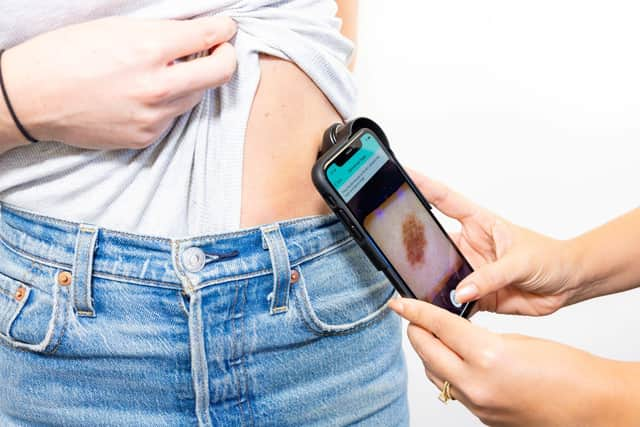

DERM has assessed over 250,000 patients, finding more than 25,000 cancers.
This is the largest roll out of autonomous medical AI in NHS history and will be used to triage skin cancer referrals across the whole of the region.
With cases of skin cancer rising, early detection is what most often determines survival rate.
The use of DERM is said to grant faster access to early detection, a reduction in waitlists for specialist care and lower downstream costs.
Modelling for the three-year NHSE South East rollout suggests up to a third of urgent suspected skin cancer referrals could be safely discharged before a patient's first outpatient appointment - releasing an estimated 13,500 consultant hours a year, equivalent to around 27,000 additional appointments across the region.
Released at the triage stage, and sustained over three years, capacity at this scale represents significant long term easing of pressure on NHS dermatology pathways. Where there is no wait for triage, treatment can start sooner for patients who need it.
Neil Daly, founder and CEO of Skin Analytics said: “We are delighted to work with NHS England South East on a landmark partnership to improve skin cancer pathways for the entire region.
"We've helped more than 250,000 patients find more than 25,000 cancers over six years, and this partnership takes a proven technology to a large part of the UK.
"The NHS is the only health system anywhere to take autonomous AI into cancer pathways at this scale, and that's a real world first that happened here.”
Daghni Rajasingam, Regional Chief Medical Officer for NHS England in the South East, said: “For patients, a suspected cancer referral can be an anxious time. Using AI safely alongside clinical expertise means many people can receive reassurance sooner, while those who need further investigation can be prioritised for specialist care.
"This rollout will also free up thousands of hours of valuable clinical time, helping teams focus on patients with the most complex needs and creating capacity for thousands more appointments.
"It is a fantastic example of how the South East is harnessing technology to turn the ambitions of the 10-Year Health Plan into better, faster care - improving access, supporting our workforce and delivering better outcomes for patients.”
Dr Alexandra Kemp is a Consultant Dermatologist and Trust Cancer Clinical Director at Amersham Hospital, part of Buckinghamshire Hospitals NHS Trust, where DERM is already in use.
She said: “Across the country referrals for suspected skin cancer are continuing to rise and there are not enough dermatologists to manage these referrals.
"AI DERM is a clinically proven AI device that has enabled us, through image assessment, to take harmless lesions off the cancer pathway more quickly, allowing the dermatologists in Buckinghamshire to focus time on true skin cancers, and at the same time freeing up more capacity to see other common but sometimes debilitating skin conditions such as eczema, psoriasis and acne.”