
Poundland’s uncertain future raises concerns for Sussex shoppers

Poundland has said its stores remain open as normal, and highlighted improving sales, amid reports the discount retailer could enter administration.
Responding to Sussex World, the company said the sale process was a matter for owner Gordon Brothers and its advisers, adding that it was working to support the best outcome for staff and business partners.
A Poundland spokesperson said: “The sale process continues to be a matter for Poundland’s owner Gordon Brothers and their advisers.
“Even though this situation is not of Poundland’s making, we continue to work hard to support the best outcome for our colleagues and other partners.
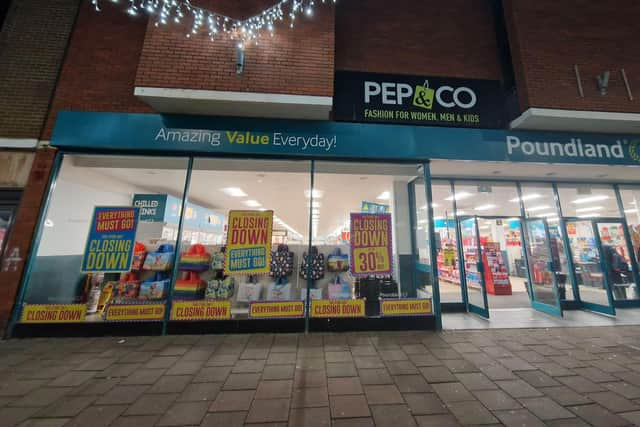

“Furthermore, our stores remain open as normal.”
According to national reports, the discount retailer could face insolvency and a break-up as its owner considers offers for the business.
ITV News reported on October 27 that Gordon Brothers was assessing alternative bids, including offers for parts of the chain, after management had identified Martin Property Group as its preferred buyer. Administration remained a possible outcome rather than a confirmed development.
The uncertainty follows closures reported by Sussex World in Horsham, Hailsham, Worthing, Brighton, Bexhill, Chichester, Haywards Heath and Eastbourne.
Branches still listed as open include those in London Road, Bognor Regis; North Street and London Road, Brighton; Queens Square and Broadfield Barton, Crawley; Terminus Road, Eastbourne; London Road, East Grinstead; and Priory Meadow Shopping Centre, Hastings.
Brighton’s London Road branch had previously been earmarked for closure, but Poundland told Sussex World in November 2025 that the plans were on hold.
Poundland pointed to its latest trading release, which reported unadjusted like-for-like sales growth of 3.3 per cent for the quarter ending September 27, 2026.
On an adjusted basis, accounting for changes from its restructuring programme including the removal of categories such as frozen food, growth was 6.4 per cent.
The retailer said unadjusted like-for-like sales rose by 6.7 per cent in September and 9.8 per cent in the first week of its new financial year. It said it expected profitability at the upper end of its expectations.
Managing director Barry Williams said: “We ended Q4 with significant momentum, returning to positive like-for-like growth and that momentum has only strengthened in the first week of the new financial year.
“Our recovery plan is working, thanks to our investment in simple low pricing and new ranges, powered by our new in-house teams.”
Molly Monks, an insolvency expert at Parker Walsh, said demand from shoppers looking to save money did not necessarily mean a discount retailer was financially secure.
She said: “Poundland’s situation highlights a difficult reality for discount retailers: being popular with cash-strapped shoppers does not automatically make a business financially viable.
“Customers may be trading down, but retailers still have to cover wages, rent, energy, distribution and supplier costs. If those costs rise faster than a business can generate sustainable margins, high sales volumes alone will not protect it.”
Ms Monks said businesses built around low prices faced particular difficulties when trying to absorb rising costs.
“For retailers built around affordability, there is also a limit to how much prices can rise before customers start questioning whether they are still getting a good deal,” she said.
“That makes protecting profit margins particularly challenging. The business has to remain cheap enough to attract shoppers while generating enough money from every sale to cover its costs.”
Several Sussex closures were linked to difficulties agreeing terms with landlords. Poundland told Sussex World it had been unable to secure agreements allowing it to continue trading in Worthing, Chichester and Eastbourne’s Langney Shopping Centre.
Ms Monks said the outcome of a rescue process could have significant consequences for staff, suppliers and communities.
“The difference between rescuing a business and selling off its assets can be enormous for employees, suppliers and the communities that depend on its stores,” she said.
“A buyer taking on the business as a whole may be able to preserve more of its value, including jobs, supplier relationships and the brand itself.
“However, a rescue needs more than a new owner. It requires credible funding and a realistic plan to make the business sustainable. If the underlying problems with costs, pricing or profitability remain unresolved, a change in ownership may simply postpone the same difficulties.”
Gordon Brothers told ITV News that offers for the whole business and significant viable parts would be evaluated with a view to reducing uncertainty for staff and other stakeholders.
Ms Monks said other businesses should take the situation as a reminder to identify financial problems early.
“Financial distress rarely happens overnight,” she said. “It can build as margins are squeezed, cash reserves fall and businesses increasingly rely on future sales to cover bills that are already due.
“The danger is that directors can mistake continued trading for financial stability, particularly when customer demand appears healthy.
“Poundland’s difficulties are a reminder that even well-known brands with an established customer base are not immune to financial pressure.
“Retailers are having to balance price-sensitive shoppers, operating costs and intense competition, while adapting to changing consumer habits.”
Poundland’s trading release also announced a trial in 15 stores to expand general merchandise and clothing ranges and change shop layouts. None of the pilot locations listed are in Sussex.
The retailer said the trial began rolling out in mid-September and that initial results were encouraging.
Mr Williams said: “That positive customer reaction is great news for our shareholders, colleagues and suppliers.”